


THE NEW ERA OF STORYTELLING · 2026

No studio. No star cast.
Your story can still reach the screen.

AI is reshaping how visual stories are made. With a computer, a clear idea and a thoughtful workflow, independent creators can turn concepts into short dramas, animation, trailers and branded videos.

You do not need to come from the film industry. Start by making something worth watching.
$14BOmdia forecast for global microdrama revenue in 2026
66MEstimated U.S. monthly microdrama users in 2025
1+People can start a lean creative unit
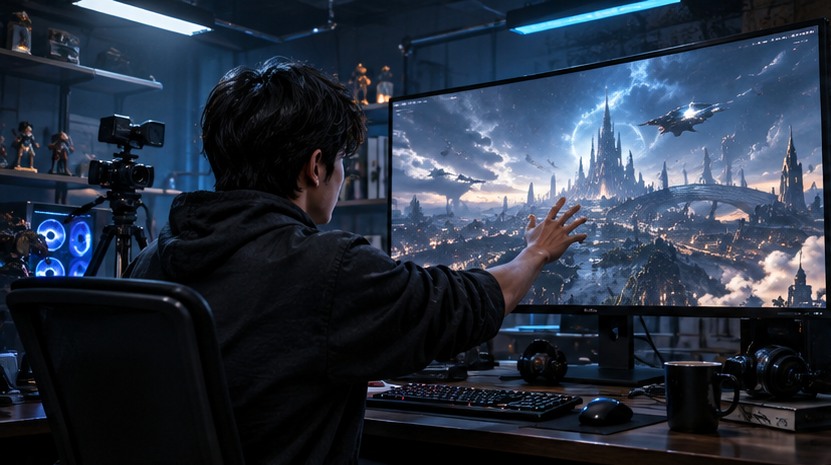
A creator developing cinematic scenes in an AI-assisted studio
From a single idea to a story people can see.
A SHIFT IN CREATION

The biggest change is not just image quality.
It is the barrier to entry.

Traditional film production can require crews, locations, performers, equipment and substantial upfront funding. AI tools make parts of ideation, storyboarding, visual development, voice production and post-production more accessible to smaller teams.

Storytelling still matters. Story sense, taste, judgment and the ability to keep creating matter more than ever.

Democratised tools ≠ guaranteed success
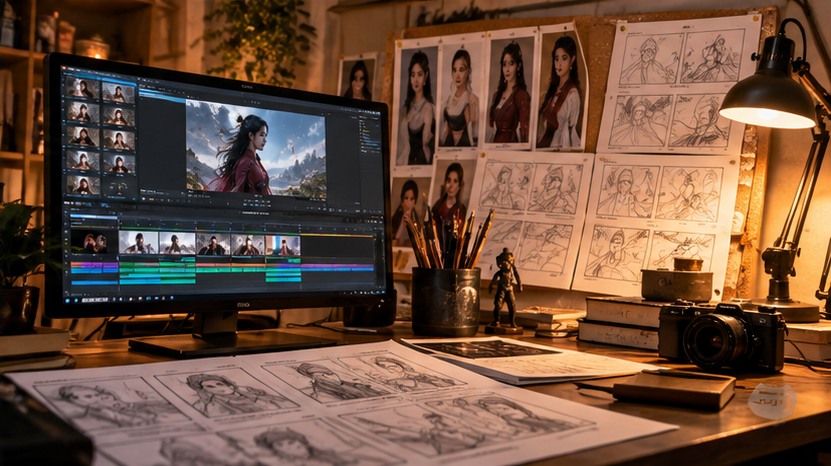
An AI filmmaking workstation with storyboards
OPPORTUNITY MAP

Where can independent creators begin?
There is more than one way in.

Start with the part you enjoy: writing, visual development, editing, sound, distribution or helping others turn ideas into finished work.

✍
01 · STORYTELLING

Independent microdrama creator

Turn a thriller, romance, fantasy or sci-fi idea into short episodes. Test a pilot before committing to a full series.

Potential models: creator programmes, sponsorships, audience support and IP licensing. Results depend on eligibility, performance and rights.

🎬
02 · PRODUCTION SERVICES

AI video production studio

Create ads, concept trailers, motion comics, character teasers and short-form video for brands, authors and content teams.

Potential models: project fees, per-episode pricing and ongoing production retainers.

🌍
03 · LOCALISATION

Multilingual adaptation team

Adapt original work for English, German, French, Spanish and other audiences through dialogue, cultural details, subtitles and voice work.

Potential models: localisation fees, distribution partnerships and regional licensing.

📚
04 · IP DEVELOPMENT

Bring books and comics to video

Work with authors to turn stories into motion comics, character teasers or short dramas. Secure adaptation rights first.

Potential models: adaptation fees, licensing shares and co-development.

🧑‍🎤
05 · CHARACTER BRANDS

Virtual performers and character IP

Build original characters with consistent looks, personalities and backstories, then develop them across multiple pieces of content.

Potential models: brand collaborations, character licensing and content monetisation.

🛠
06 · PRODUCTION SYSTEMS

Workflow and technical support

Help small teams build prompt libraries, character-consistency workflows, asset systems, editing templates and repeatable pipelines.

Potential models: workflow setup, training and technical consulting.

THREE MARKETS · DIFFERENT STORIES

China, the United States and Europe:
Different audiences. Different playbooks.

Microdrama is not a single format that can simply be translated. Each market has distinct genres, platforms, languages and compliance expectations.

Fantasy world and ancient mountain city
CHINA

A mature format with intense competition

Fantasy, cultivation, urban success stories, suspense, family drama and AI motion comics have established audiences.

  • Explore original AI motion comics, vertical dramas and book-to-screen pilots.
  • Produce a 3–5 episode sample and study completion, follows and comments.
  • Challenges: content saturation, review requirements, copyright and AI labelling.
Gothic romantic drama scene under moonlight
UNITED STATES

Active mobile microdrama monetisation

Werewolves, vampires, billionaire romance, revenge, suspense and post-apocalyptic stories are worth studying.

  • Explore original English stories, vertical series, teasers and localisation.
  • Study episode hooks, pacing and audience feedback on short-drama apps.
  • Challenges: acquisition costs, paid conversion, performer and voice rights.
EUROPE

Localisation can be the point of entry

The UK, Germany, France and Spain are not one uniform audience. Genre preferences and distribution conditions vary by country.

  • Explore dubbing, subtitles, script adaptation and regional distribution.
  • Choose one country and one language before expanding.
  • Challenges: language quality, cultural fit, GDPR and AI transparency rules.
CROSS-BORDER

One original IP, multiple expressions

Adapt relationships, setting, dialogue and visual style for each audience instead of relying on literal translation.

  • Keep the core conflict and emotional hook.
  • Adapt cultural references, names, settings and dialogue.
  • Validate with a small audience before scaling.
Omdia estimated global microdrama revenue at approximately US$11 billion in 2025 and forecast approximately US$14 billion for 2026. These are industry estimates and forecasts—not creator income or a guarantee of commercial success.
REAL-WORLD CREATOR STORIES

Not just theory.
Real teams are already building with AI.

From a self-taught microdrama producer in China to small creative studios in Europe and the U.S., these reported examples show several ways AI-assisted storytelling is becoming a business. The stories are edited summaries of published reporting—not fictional testimonials.

Editorial illustration of an AI-assisted historical short-drama scene
CHINA · INDEPENDENT CREATOR + REMOTE CREWAUDIENCE BREAKOUT

Zhang H***: From failed ventures to a chart-topping AI drama

At 54, after several business setbacks, Zhang returned home to care for his father. Reading web novels, he began wondering whether stories he could not afford to film might be turned into video with AI.

He started learning AI filmmaking in March 2025, often spending more than 10 hours a day on it. His “Old Eleven Theater” network grew into a remote team of around 30 people, with a core group of non-industry contributors producing Armed Into the Song, a historical time-travel microdrama.

4B+plays reported by the producer by early October 2026
¥10Mcommercial revenue reported by the production team; not independently audited

Important context: the ¥10 million figure is a reported team/project revenue figure—not Zhang’s personal take-home income or verified net profit. The team’s reported compute spending exceeded ¥1 million. A team member, not Zhang, was reported to have paid off debt through the work.

Read the full case & evidence notes →

Editorial illustration of an independent creator editing an AI video at home
CHINA · CAREER SWITCHERONE-PERSON WORKFLOW

Jiang Huan: From finance work to an AI “one-person crew”

Jiang Huan, 30, previously worked in finance. She moved into AI microdrama production and learned to turn scripts into characters, scenes and short video sequences with a computer and a suite of AI tools.

Her workflow covers visual development, clip generation, subtitles and sound effects. She told state-affiliated media that she could produce one or two episodes a day, each around three to five minutes. Her company had more than 10 employees working independently on AI microdramas.

1–2episodes produced per day, as reported
10+team members at the company

No personal income or profit figure was disclosed. This is a documented career-transition and production-capacity example—not a claim that every beginner can earn the same amount.

Read the full case & evidence notes →
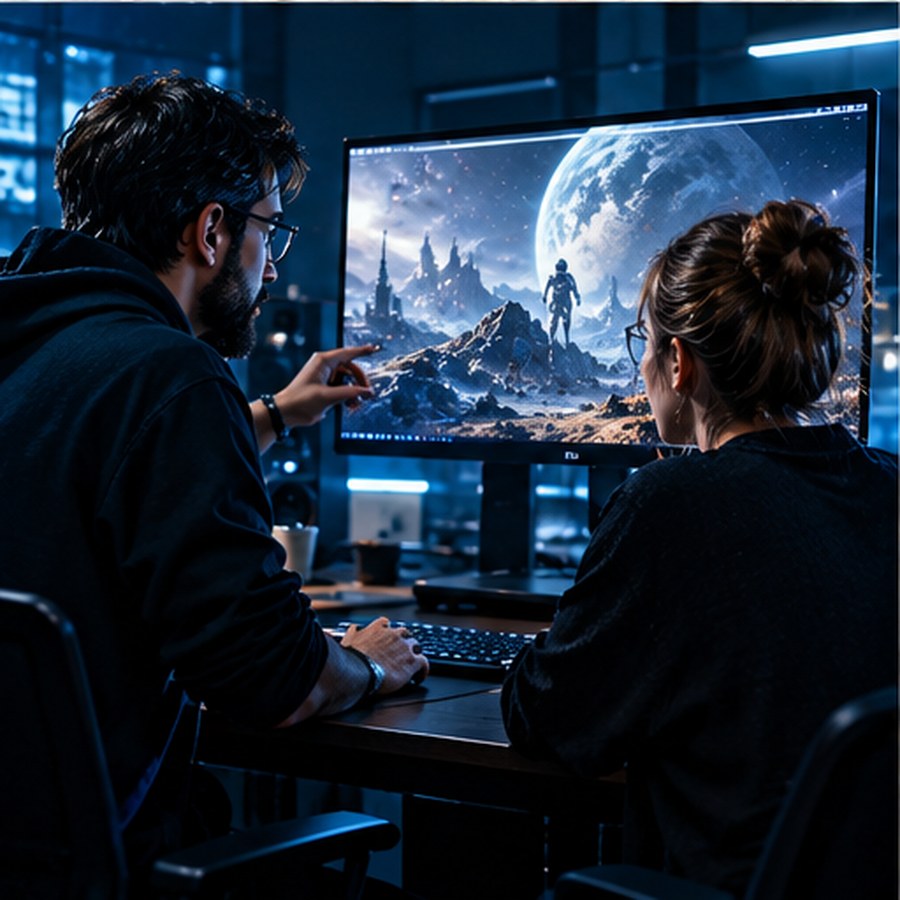
Editorial illustration of a small creative team reviewing AI-generated story scenes
CHINA · SMALL PRODUCTION STUDIOFASTER PIPELINE

Versatile Media: A small team tests an AI-native production pipeline

Hangzhou-based Versatile Media used its in-house MOKE workflow to make a fully AI-generated microdrama about a young man and a white fox. The company described the project as a test of an end-to-end process, from scripting through final video.

Producer Niu said the team completed the series in four to five days and it generated nearly 18 million views on Hongguo. The company also described how AI-assisted environment work could compress tasks that once took four or five people two weeks into a shorter two-person workflow.

18Mreported views for the test series
4–5 daysreported production time

The company did not disclose revenue or profit for this title. The figures are attributed to the company’s interview with CNA; view counts are not equivalent to paying customers.

Read the full case & evidence notes →
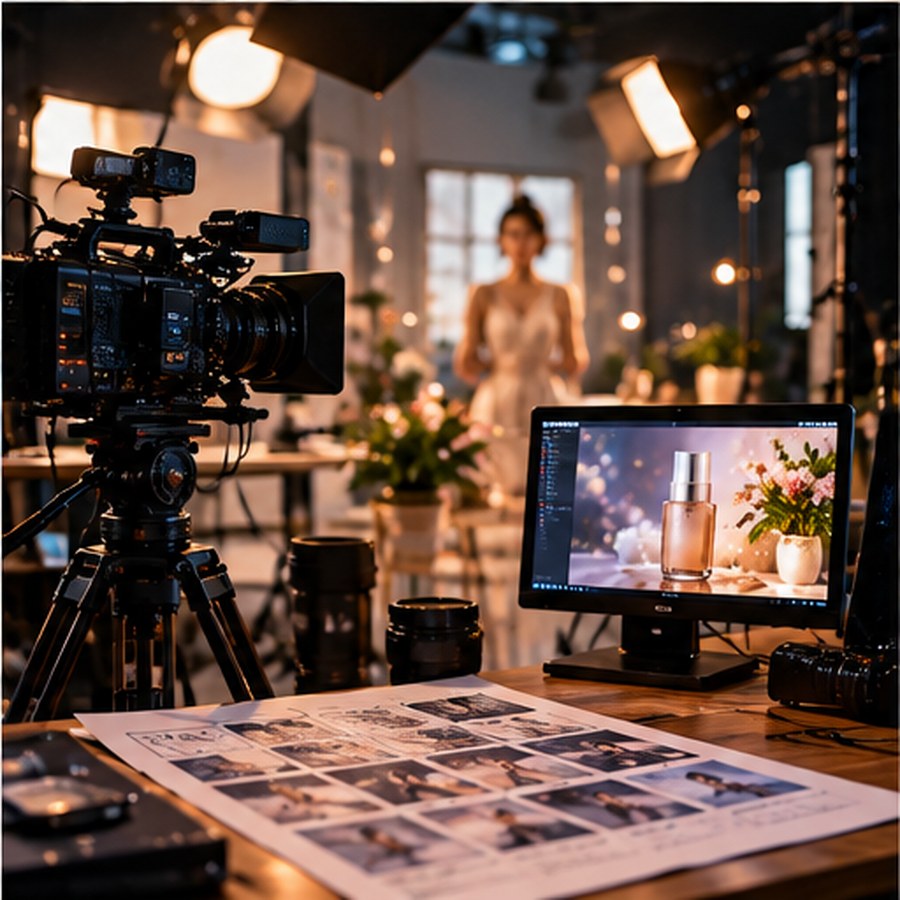
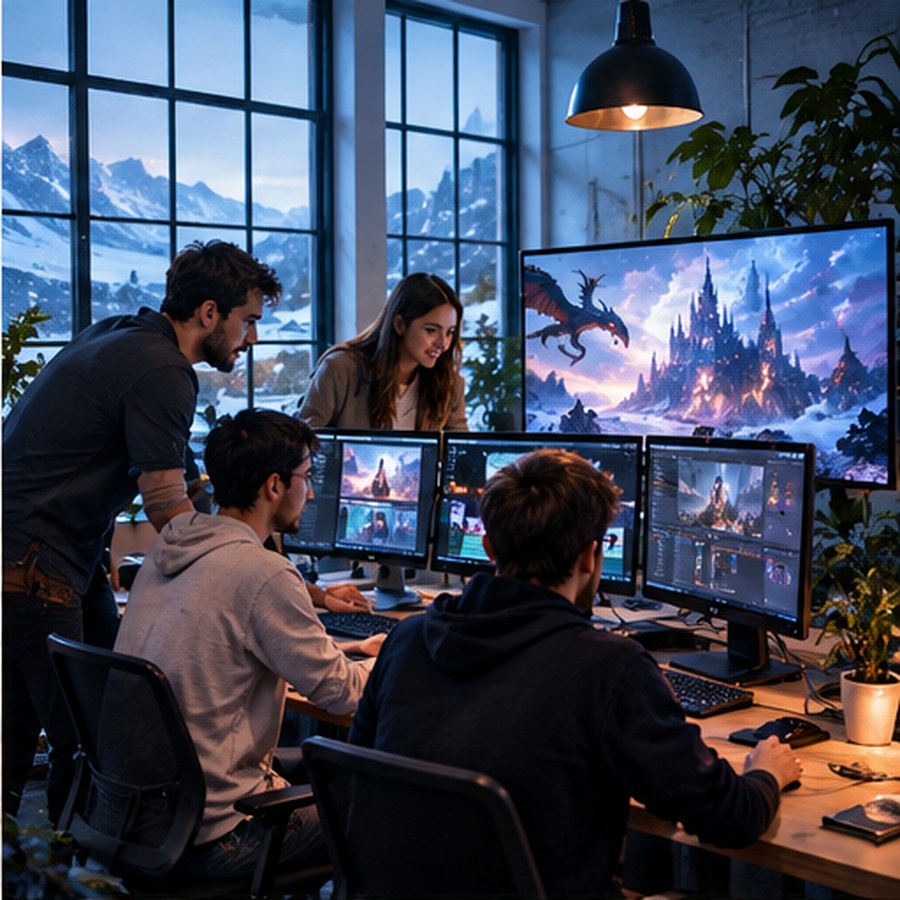
Editorial illustration of a small AI film team working across multiple editing screens
NORWAY · CREATIVE STUDIOB2B COMMISSION

Reimagine: Five creatives turn a script into 450 AI-assisted shots

Founded by filmmaker Christian Schüssler, Oslo-based Reimagine took on a young-adult fiction project for Pocket FM as the platform explored moving from audio stories into visual storytelling.

The European Broadcasting Union reported that a five-person team—director, two animators, art director and editor—could produce a fully animated 20-minute episode each month. Schüssler described a workflow generating around 450 shots in 30 days.

450shots in a 30-day production cycle
20 minanimated episode length

This is a documented client-production case, not a disclosed earnings story. The studio has not published project revenue for this commission.

Read the full case & evidence notes →
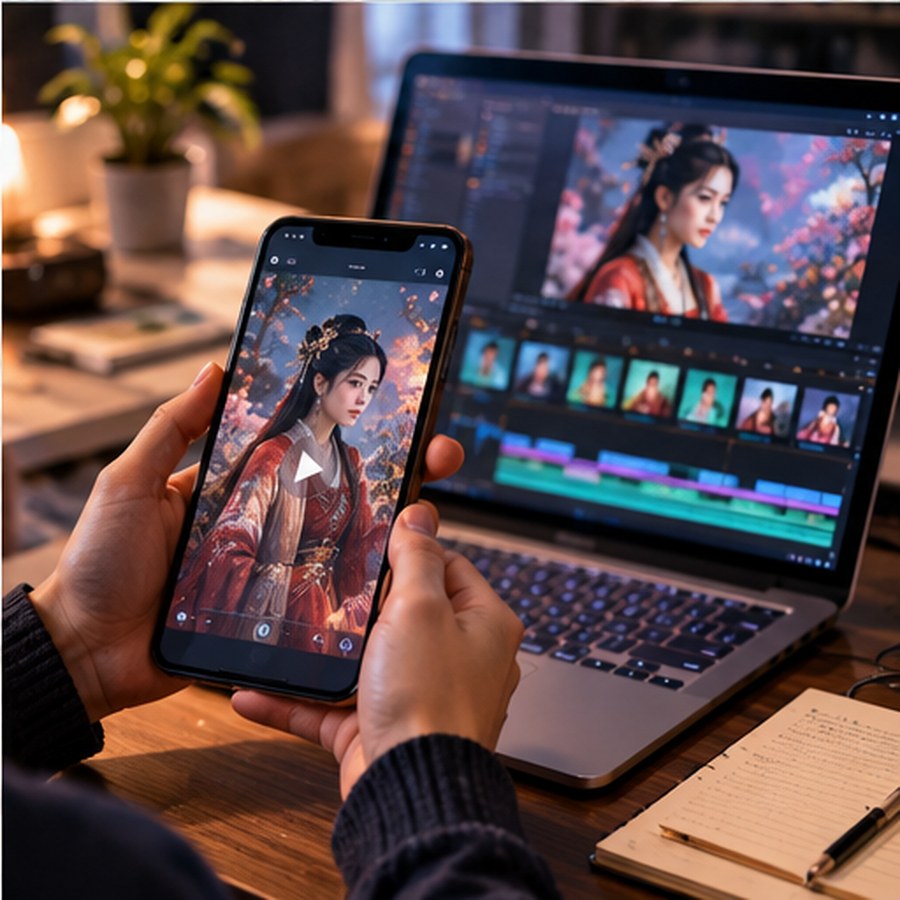
Editorial illustration of a European AI video studio producing cinematic content
EUROPE · AI VIDEO STUDIOVIRAL + CLIENT WORK

The Dor Brothers: Viral AI films become a commercial studio

The Dor Brothers built an international AI-video production studio around films, commercials, music videos and social content. Rather than relying on a single viral clip, the team used its visual style and online reach to attract brand and artist projects.

The studio now reports more than 500 million total views and 300+ projects. Its film APEX passed 20 million views in 48 hours. The New York Times reported that the studio’s commercial-project revenue exceeded US$1 million in the year covered by its 2025 profile.

500M+total views claimed by the studio
$1M+commercial revenue reported by The New York Times for the prior year

The view and project totals are studio-reported. The revenue figure is media-reported, not an audited financial statement; it should not be read as profit or a typical creator outcome.

Read the full case & evidence notes →
Editorial illustration of an AI-enhanced commercial film production workflow
EUROPE · SMALL COMMERCIAL STUDIOCLIENT-LED REVENUE

Layer8: Film veterans turn AI experiments into paid commissions

Ali Bach, James Dubec and Kevin Mullins combined creative direction, commercial production experience and operations. Their thesis was not “let AI make everything”; it was to use AI where it accelerated visual development while keeping human direction, editing and finishing central.

After showing early tests to existing contacts, the studio reportedly won a California Highway Patrol-related paid commission within days. That portfolio work helped generate referrals, including a three-part beverage campaign. A 2025 founder case reported approximately US$50,000 in monthly studio revenue.

Week 1first paid commission, according to the case account
~$50Kreported monthly studio revenue in a founder case

The founders were experienced film professionals, not complete beginners. The monthly figure is a self-reported project-studio revenue estimate, not verified recurring revenue or profit.

Read the full case & evidence notes →
All case images on this page are AI-generated editorial illustrations, not photographs of the named people or documentary stills from their productions. Stories are paraphrased from published reporting; no text is presented as a direct quote. Reported revenue, views and production figures are attributed to their sources and are not independently audited unless stated otherwise. These are exceptional examples, not typical results or income promises.
Explore all six case studies & source notes ↗
Cinematic dark-romance scene created with AI tools
WHAT AI CHANGES

Worlds that once felt too expensive to film
can now begin as a pilot.

AI video tools let independent creators prototype fantasy castles, future cities, imaginary creatures and surreal scenes. You do not need a full series at once. Start with the strongest 30 seconds.

  • Story and storyboard: turn an idea into a sequence of shots.
  • Characters and settings: establish consistent visual references.
  • Video and sound: generate shots, dialogue and ambience, then edit.
  • Iteration: refine pacing and story based on audience response.
A PRACTICAL BUSINESS MODEL

Use client work to build capability.
Develop original IP for the long term.

For a new creator or small studio, betting everything on one self-funded series is rarely the only sensible route.

EARLY CASH FLOW

Take production projects

Make short ads, concept trailers, motion comics and pilot episodes. Define deliverables, revision limits and usage rights in writing.

CAPABILITY

Build a repeatable workflow

Document character references, prompts, storyboard templates, asset management, sound standards and quality checks.

LONG-TERM VALUE

Develop original IP

Publish a recurring original world or character series and gradually build an audience and potential licensing opportunities.

Keep expectations realistic: AI can reduce some production barriers, but it does not guarantee views, clients or profit. Include subscriptions, failed generations, manual revisions, marketing, taxes, platform fees and payment delays in your cost model.
YOUR FIRST 30 DAYS

Start from zero.
Finish one piece you can publish.

Use four weeks to test whether you enjoy the work, whether viewers respond and whether clients might pay for the service.

Week 1: Choose a story

Pick a genre, write a logline, lead-character profile, central conflict and five-episode outline.

Week 2: Build the visual pilot

Create character references, environment designs and storyboards. Generate a 15–30 second teaser and check consistency.

Week 3: Edit and publish

Finish three short episodes with subtitles, sound and required AI disclosures. Focus on one primary platform.

Week 4: Review and package

Study retention, completion, comments and follow-up interest. Track time and costs, then decide what to improve.

THE CREATOR TOOLKIT

You do not need the most tools.
You need a dependable production chain.

01 · Story and planning

Use language models to brainstorm, structure episodes and draft storyboards. Final creative decisions remain yours.

02 · Characters and images

Establish character, costume, environment and visual references. Maintain a consistent character bible.

03 · Video generation

Test text-to-video, image-to-video, extensions and reference controls. Check commercial licences.

04 · Sound and localisation

Prepare dialogue, voice work, music, subtitles and language versions with properly licensed assets.

05 · Editing and quality control

Check visual artefacts, character drift, lip sync, pacing, captions, audio levels and mobile readability.

06 · Distribution and operations

Review platform rules, AI disclosures, rights records, advertising policies and creator monetisation eligibility.

QUESTIONS BEFORE YOU START

What should you know before beginning?

Can I make an AI microdrama without film experience?

Yes. Start with a short film, motion comic or concept trailer. Learn story structure, visual language, editing rhythm and rights management. AI lowers some production barriers, not the need for taste and storytelling.

Do I need expensive equipment or many subscriptions?

No. Start with one writing assistant, one image tool, one video tool and standard editing software. Add subscriptions only when a real project requires them.

Can AI microdramas guarantee income?

No. Market growth does not mean every creator will profit. Competition, acquisition costs, platform rules, production quality and rights all affect outcomes. Test demand with a small budget first.

Can I copy film characters or use a celebrity’s face?

Do not assume you can. Obtain appropriate permission before using a real person’s likeness or voice, copyrighted characters, music or protected material.

Can I release the same series in China, the U.S. and Europe?

You may share a core IP, but adapt relationships, cultural references, dialogue, voice work and marketing for each market. Check local laws and platform requirements.

RESEARCH & CONTEXT

Ground market decisions in credible research.

These references help explain industry trends. Market figures are estimates or forecasts; AI capabilities and platform rules change quickly. Each reference has its own overview page on this site.

Do not wait for opportunity to knock.
Make your first story.

Start with a 30-second teaser. Test the idea, workflow and audience response.

Explore the 30-day plan ↗